27-03-2024
Magical trainings
The best approach to educating professionals on a specific topic depends on various factors such as the subject matter, the audience’s learning styles, their existing knowledge base, and the resources available. However, we all know those trainings where you have a 1 or 2-day program filled with theory, theory, and even more theory. At the end of the day, we are drained out and have forgotten what we learned in the first hour. The Ebbinghaus Forgetting Curve, proposed by German psychologist Hermann Ebbinghaus, suggests that people tend to forget a significant portion of newly learned information over time if it is not reinforced. According to this theory, individuals may forget up to 50% of newly learned information within the first hour after learning it, and retention continues to decline over time.
While exact retention rates can vary, research generally indicates that learners may retain anywhere from 20% to 80% of the information learned during training, depending on factors such as the effectiveness of the training methods, the relevance of the material to their job or daily life, and their level of engagement and motivation during the training. In principle, this suggests moving away from traditional passive learning methods and calling for an instructional approach that actively involves and relates to learners in the learning process. But how do you do that?
Here are some common examples of interactive learning methods:
- Case Studies are analyses of real-life cases or scenarios relevant to the topic being studied. Learners analyse the situation, identify key issues, and propose solutions, promoting critical thinking and problem-solving skills.
- Games and Quizzes: Educational games, quizzes, or interactive exercises designed to reinforce learning objectives and assess understanding in a fun and engaging manner.
- Hands-on Demonstrations: Practical demonstrations or experiments where learners actively engage with materials or equipment related to the topic, promoting experiential learning and deeper understanding.
- Interactive intermezzos: such as multimedia elements, interactive presentations, or virtual reality to present information in a dynamic and engaging way.
- Role-playing and simulations: Simulated scenarios or role-playing exercises involve learners taking on specific roles and engaging in realistic situations. This helps learners apply theoretical knowledge to practical contexts and develop decision-making skills.
- Small groups: Activities in which learners work together in small groups to solve problems, complete tasks, or discuss concepts foster collaboration, communication, and critical thinking skills. A maximum of eight to ten people works best. Beyond that, it becomes more difficult to keep everybody aboard in the same room.
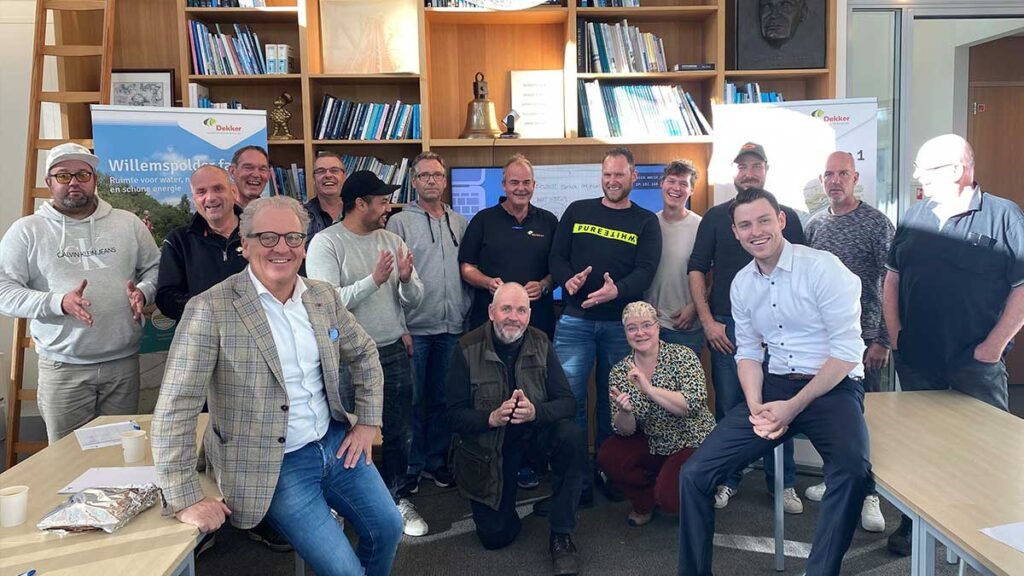
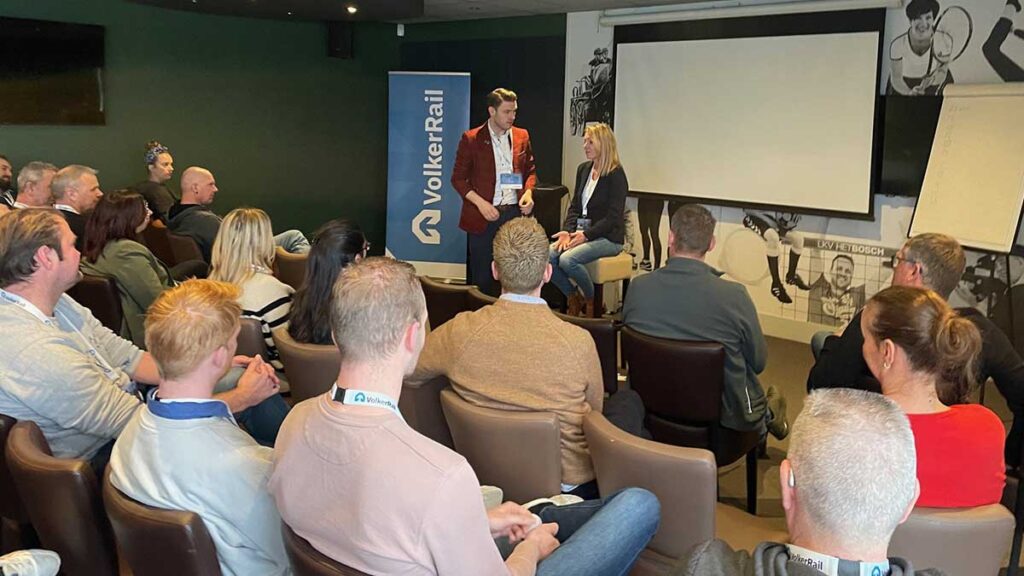
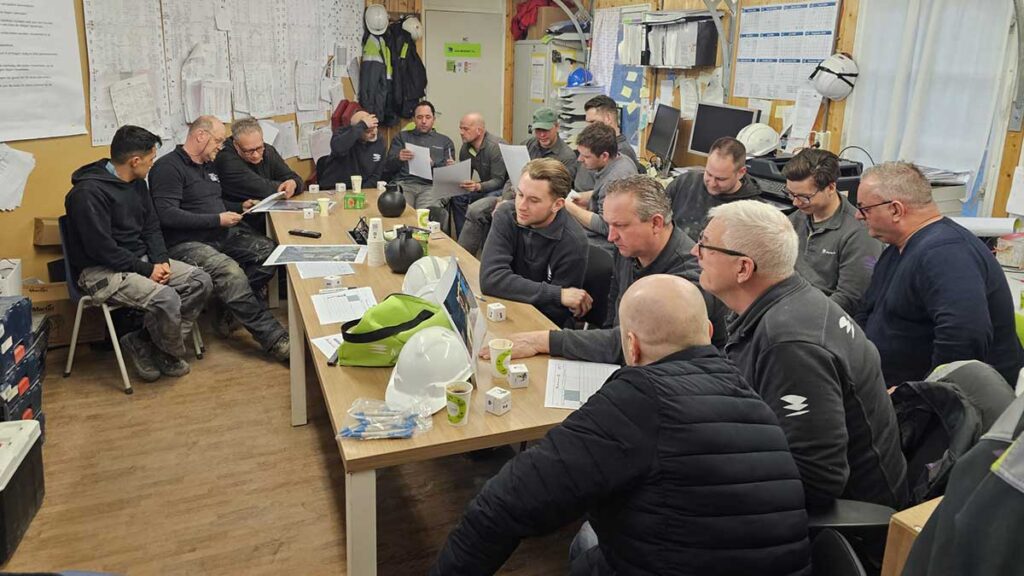
You might read this and think: “Makes sense, but what does this have to do with magic?” That is a good question! To foster active engagement and stimulate knowledge retention and transfer, I use magic tricks and experiments to make the theory come alive. For example, with the Dutch organization KPE (an education expert for people working in the construction, infrastructure, and real estate industries), I train dozens of construction workers and their management every month on safety. Most of these workers like to execute their job rather than listen to yet another safety training.
However, by making the training more entertaining and personalized to the specific needs and interests of them, we can gain more effectiveness out of the training. In this training, I performed magic tricks and experiments that simulated the theory situation and let them experience it firsthand. By doing so, they can immediately see and feel why we are explaining this theory specifically and what this means for their daily work. Training closely aligned with learners’ job tasks or real-life situations is more likely to be remembered and used, thus making it more effective.
You might not have thought about this before, but these magical and interactive trainings are becoming a thing! In 2024, about 20% of my business will originate from helping organizations with training programs, both face-2-face and online. These are complex assignments to do because, with every organization, I still need to understand the theory, design magic tricks around them, adapt the storytelling to the trick, and become familiar with the target audience. They are extensive processes, but once completed, the effectiveness of the training is much better. And so is the value for money for the customer. You do not organize a training just for fun. You want your customers, personnel, or partners to learn something they can apply to their daily work or private life. Adding a bit of magic to your course or training days is one way of doing it. Of course, there are many other interactive possibilities as well. Choose the learning method that best serves your audience. The sky is the limit!